Phone +86 13698694209
Email info@qdvantis.com
Address
RM 302-26-59 No. 6B, Tong'an 2nd Road, Shibei District, Qingdao Shandong China
Phone +86 13698694209
Address
RM 302-26-59 No. 6B, Tong'an 2nd Road, Shibei District, Qingdao Shandong China

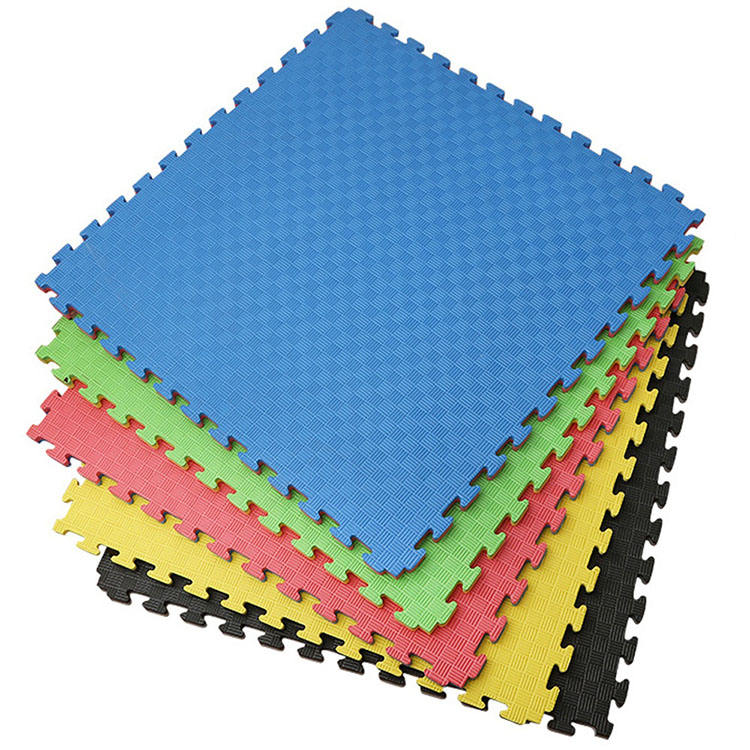
If you have ever compared two EVA mats that look identical side by side — same color, same thickness, same tile size — you have probably wondered why one floor lasts for years and the other starts dipping and creaking within a season. The answer is usually a single number that never shows up in a photo: density, measured in kg/m³.
EVA mats are made by foaming a closed-cell material into a sheet. Density describes how much material is packed into each cubic meter of that foam. In the flooring trade, EVA mats are commonly quoted somewhere in the 80–120 kg/m³ range, and that range covers products that behave very differently in daily use.
A lower number means more air and less material. A higher number means the cell walls are thicker and closer together. Neither is “wrong” — but each density band is right for a different job, and problems start when the band does not match the load the floor has to take.
Before comparing prices between suppliers, pin down the numbers that actually decide how the floor will age:
As a manufacturer, we quote the actual density band of every order instead of hiding behind “high density”, so buyers know exactly which end of the 80–120 kg/m³ range they are getting. If you are specifying a floor for a gym, a dojo or a studio, tell us the load profile and the zone layout — we will come back with a density and thickness suggestion for each zone before you commit to a single price.
