Phone +86 13698694209
Email info@qdvantis.com
Address
RM 302-26-59 No. 6B, Tong'an 2nd Road, Shibei District, Qingdao Shandong China
Phone +86 13698694209
Address
RM 302-26-59 No. 6B, Tong'an 2nd Road, Shibei District, Qingdao Shandong China
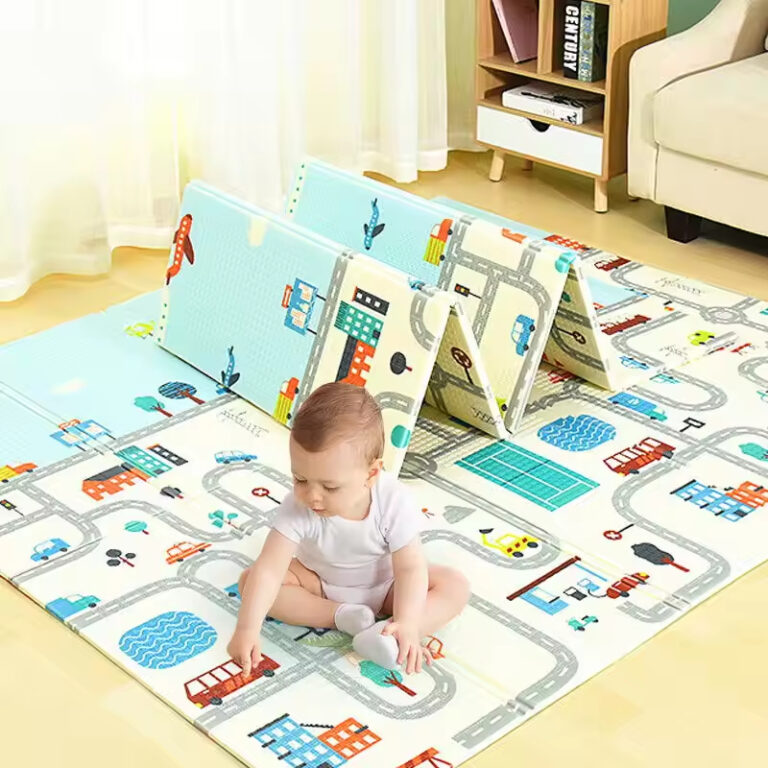
Importers and nursery brands rarely lose sleep over foam quality — they lose sleep over paperwork. When a baby play mat shipment reaches customs or a retail buyer asks for test documentation, missing or mismatched files can delay an entire season. Knowing which documents to request before production starts is what keeps a baby play mat program moving.
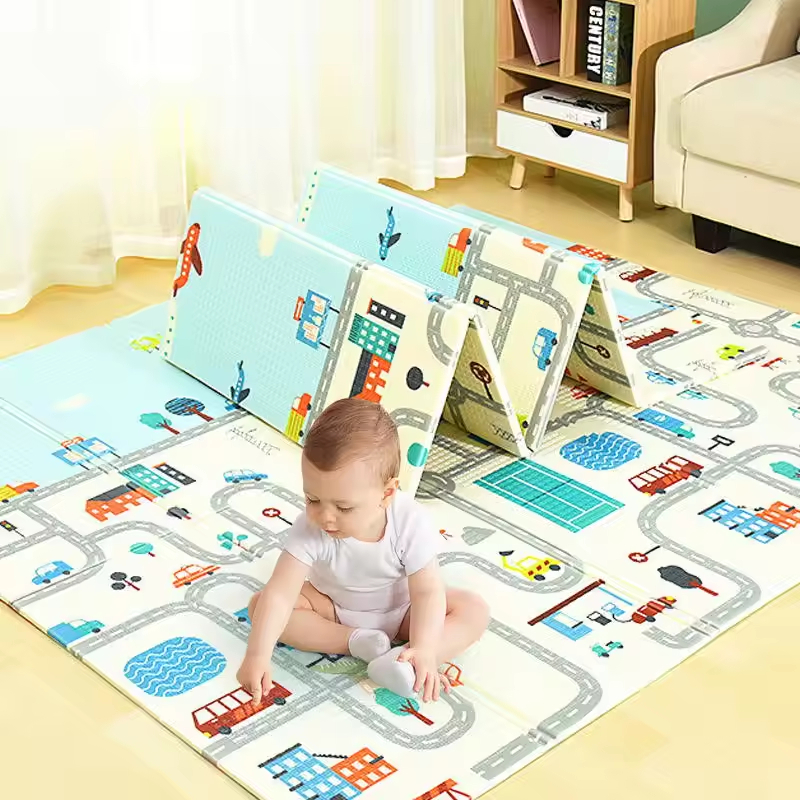
Most buyers start from the destination market. For the United States, importers commonly ask for documentation related to ASTM F963 and CPSIA, and many retail chains also expect a Children’s Product Certificate issued by the importer of record. For European markets such as Germany and Poland, EN71 and CE are the usual reference points, and buyers frequently add REACH/SVHC, PAHs and formamide questions to the same enquiry. UK buyers typically ask how products are documented against UKCA requirements. Buyers in Australia, Colombia and Brazil often reference US or EU documentation as a baseline and confirm local expectations separately.
A practical rule: ask the supplier what documentation is available for each market before you confirm the specification, not after the purchase order is signed. Documentation on request should cover the specific product family you are buying.
A test report is only useful when it describes the mat you are actually ordering. Baby play mats are commonly produced in sizes such as 180×200 cm, 150×200 cm and 180×150 cm, with thickness options from 0.6 cm up to 2.0 cm. A report prepared for a 1.0 cm mat does not automatically describe a 2.0 cm mat, and buyers who discover this at inspection stage usually have to re-test.
Before confirming an order, check three things on every report: the construction and material described, the size and thickness range covered, and the date of testing. If you change thickness, surface material or printing, treat it as a new specification and ask whether existing documentation still applies. This takes one email now and saves a customs conversation later.
Most baby play mat programs are built around design. A supplier with more than 200 existing patterns can usually cover a season’s range, but printed surfaces raise their own documentation questions. Buyers should ask which tests apply to the printed layer as well as the foam, because inks and surface films are part of the finished product.
For OEM or custom artwork, confirm three points in writing: whether the custom pattern changes the material specification, whether documentation can be updated for the new construction, and how a pre-production sample is approved before bulk. Production capacity also matters here — a supplier producing around 80,000 pieces per month can absorb pattern changes without pushing your container to the next sailing, but only if artwork is locked early.
The importers who avoid compliance surprises treat documents as an order line item. A simple checklist works:
| Market / buyer type | Documents buyers commonly ask for | What to confirm before ordering |
|---|---|---|
| United States — retail chains and e-commerce sellers | ASTM F963 and CPSIA-related documentation; CPC issued by the importer of record | Reports match the ordered size and thickness; CPC details prepared early |
| European Union — Germany, Poland | EN71, CE, REACH/SVHC, PAHs, formamide | Which tests cover the printed surface, not only the foam |
| United Kingdom | UKCA-referenced documentation | How existing EU documentation is referenced for UK shipments |
| Australia / Latin America | US or EU documentation used as a baseline | Local buyer expectations confirmed in writing |
Keep the checklist with the purchase order and attach the approved sample reference. When a new thickness or pattern enters the range, run the checklist again rather than assuming last season’s file still applies.
Which document should a US importer ask for first?
Most US buyers start with ASTM F963 and CPSIA-related documentation, then confirm who will issue the CPC for the shipment. Asking both questions in the first enquiry avoids delays once the purchase order is placed.
Do thicker mats need separate documentation?
Documentation is tied to the construction that was tested, so a 2.0 cm mat is not automatically covered by a 1.0 cm report. Confirm with the supplier which thickness range existing documents describe before you finalise the specification.
Can custom patterns be supplied with documentation?
Custom artwork is routine for suppliers with large pattern libraries, but the printed layer becomes part of the finished product. Ask whether documentation can be arranged for the custom construction before approving bulk production.
VantisMats supplies foldable baby play mats in 180×200 cm, 150×200 cm and 180×150 cm, with thickness options from 0.6 cm to 2.0 cm and a library of more than 200 patterns for OEM and ODM programs. Documentation can be provided on request for the specifications you are quoting. Send your target market, size and pattern requirements, and our team will revert with a specification proposal and sample arrangement for your review.
